Friday, May 20, 2016

The Seeker

"I dream to dream the next dream within that dream"
 
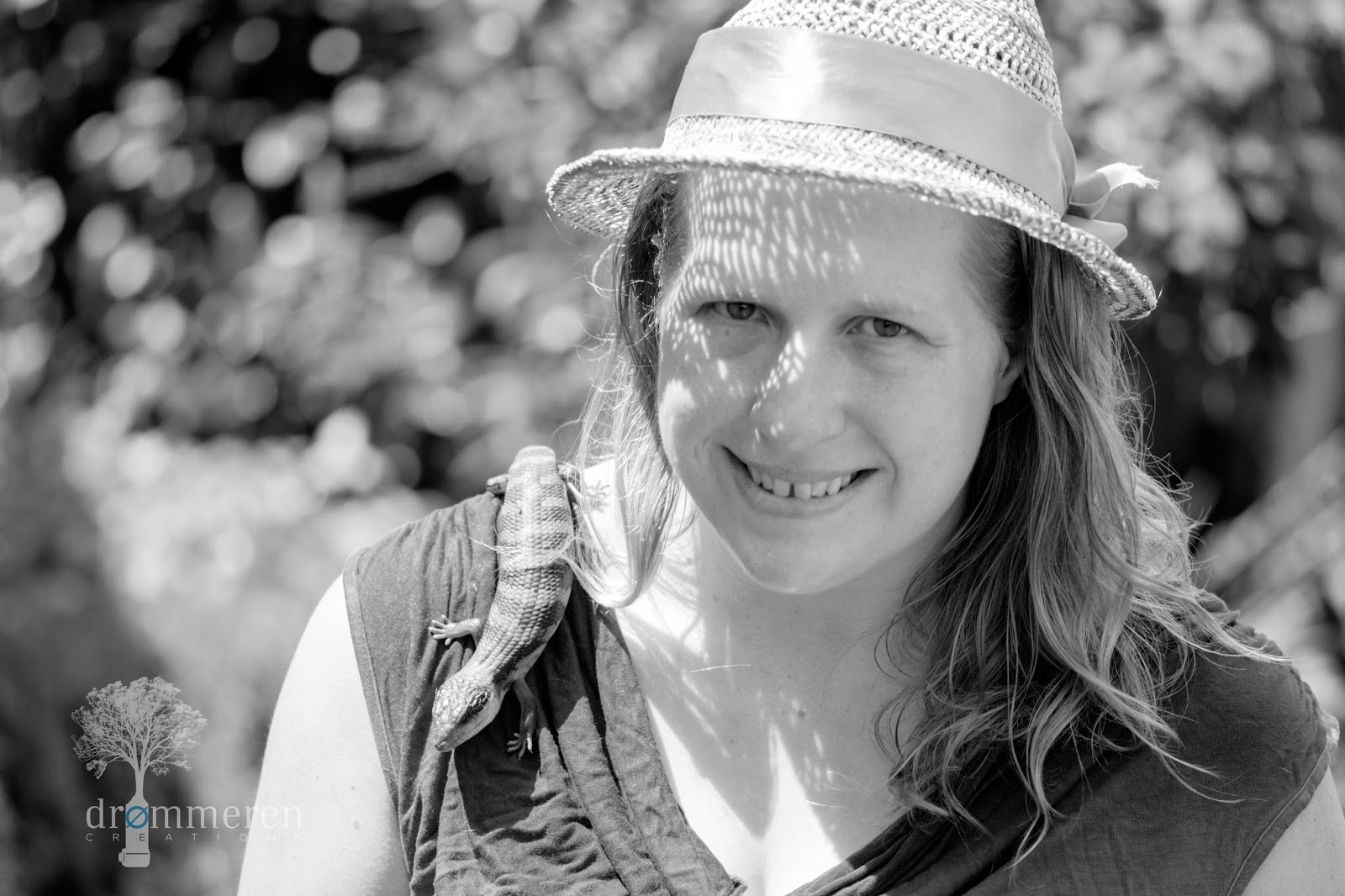
He sings. He writes. He takes some of the most amazing photographs I have seen. He is a scientist and yet an absolute poet. He’s hiding all these talents behind a 9 to 5 job, behind witty words play and sometimes even behind some clever dad jokes. He doesn’t open up easily but if you take time to really get to know him, he can be ever so surprising.

I have always believed that we are all born talented. It is therefore up to us to work on our skills and then watch it bloom. However, some people are lucky to have more than one call. Under the hat today, there is a very complex character; a man of many talents.

I have no memory of what I wanted to be as a young child. I recall the warmth of home and the love of family, so I guess looking back I wanted to keep that feeling of love.
I recall a story called Tikki Tikki Tembo that I liked. My mum used to read me Winnie the Pooh and would refer to me as Christopher Robin - I remember that. I liked to play more than read.

Coming out of high school, I wanted to be an ornithologist or naturalist. I was getting hooked on climbing and exploring the bush. I wanted to be self-sufficient and live off the land by foraging. As a result, I started to study about plants and wild foods and anything to do with thriving outdoors, like understanding weather. I also liked playing in garage bands and wanted to be like Joe Strummer or Jim Moginie or Jaz Coleman. I was pretty darn angry with the world at that time. I hated to see people chopping down trees and wasting so much. I hated all that excess around me. It was in high school that I busked with my guitar and had the courage (for the first time ever in my life) to sing a song I wrote. It was called “Don’t Wreck the Trees” it went like this:

Don’t wreck the trees they give me oxygen to breathe
Any forest standing proud and tall will move a man
And make him small
Don’t wreck the trees
Don’t wreck the trees.

My dream back then was to shake people out of what was looking like a dull, vacuous and programmed way of living. I wanted to find the words to say “there’s more to life than what you are currently doing”. Then I realised that no one is going to change, even if I shout at people. The only one I can change is me. Gradually, I lost the angry mood. I choose the “show, don’t tell” approach. I took people out bush, climbing, skiing, photographing. I thought that if I can take people out of what they were doing, getting them to spend time in the nature, they will finally start seeing things differently. Everything out there is so much simpler. Some may call this life style “primitive”; I think it’s more advanced and it has more purpose. Taking people away from the self-made structures (i.e. houses, compounds, cities) is part of my dream. Sometimes everything leads out to the nature but lots of people wonder what they are meant to do. This is profound in its own way; in my experience, I find that I don’t need to explain it; people will find what meaning they need. Many a times, passionate people told me “hey, you took me on my first climb” or first photography lesson, or first bush walk. It is something I can relate fondly; a couple of teachers took me out in high school; it’s my way of paying it forward.

I dunno who I am now; it’s not a question I ask myself. I reflect on things but not really on “who” I am. I don’t feel the need to “be” someone - generally because that feels fixed and a category. I change daily, because I grow daily, so to say who I am now is really going to change tomorrow. Let’s say I’m a learner of life. Being alive is pretty cool. I gotta say; it’s pretty awesome to wake up. I mean wake up each day from slumber, and also wake up each day to more of what’s going on. I like to see things afresh and see things anew and in that, I find meaning and look for the purpose of things. I like that. Everything has its purpose - and finding it is what really interests me.
I don’t set goals, nothing is absolute. I like variety, I like being unpredictable.

My innermost dream is to dream the next dream within that. As Poe once said - “Is all that we see or seem but a dream within a dream?”
I guess my dream is to grow. Trees don’t spend time thinking about things; they just grow.
Some dreams are meant to be shared, some are meant to be quiet. Everyone has a secret dream – some people choose to confess it, some keep it close to their heart. It’s a hat of many dreams, not just one.
I don’t think of future as in timelines. The future is unwritten and it doesn’t have a form for me. Despite the plans of others, I hope to be still doing what I love.

I wouldn’t like those 15 minutes of fame; I’d hand them back. I’d rather make a difference than have fame. Most fame comes from things that have little purpose. Fame is in the hands of those that determine it. I’d rather not let someone determine my fate or cast me as a hero in their play. My approach is like a bird flying across the sky - it leaves no trace that it was there, but its wingbeats change the weather. I don’t have a soap box; I am just disappointed in the way we collectively work. I’d rather walk away. There really is no fame left. The internet just homogenised anything noteworthy and anything that truly is worthy of recognition happens away from the spotlight.

I have a lot of heroes from when I was young. It’s weird because several people have said to me over the years that I have been a role model for them. It’s a great question because it makes me ask myself what role do I aspire to perform in the play of life and who would be someone that plays a role I could use as a reference. I’ve come to learn that life is more ad lib and improvisation; but as long as I remember what my true character is, I can at least play a bit part or just fold up seats after the performance. Like the fame bit, I’d rather not be on stage. We are all acting under social expectations and pressures. We are whole, but we get fragmented – much like a puzzle where all the pieces have been separated. It’s a cruel trick we play on others and on ourselves; trying to piece the puzzle back together. A puzzle is an artificial construction; if you look around in the nature, there are no pieces, no separation. That is why I spend so much time in the bush. There are no constraints; no puzzles.

In terms of role models, there’s not really anyone in the limelight that’s of any appeal to me. The good ones are busy behind the scenes getting on with stuff. People who get on with things, despite their setbacks, shortcomings or challenges are my role models.

My favourite book is Tao De Ching. The Art of Getting Lost by Rebecca Solnit is a book I enjoyed reading, PataPhysical Essays by Daumal is a bit of a challenge for me at the moment. I have about 7 books on the go at the same time. I’m really finding the internet is becoming like the “in brief” section of the newspaper. I like independent documentary. 

I always ask my sitters where is the place where they feel at peace, a place where masks can fall, free of any social expectation. I was - yet I wasn’t - surprised by the answer.

Asleep. We are bombarded daily with so many messages, on every level. Sleep is sacred; it’s the time when I can let go; it’s just me and my quiet mind. I can sleep pretty much anywhere. The best sleeps I have are when I’m actually on the bare ground. It’s how we’re meant to sleep, naturally. I can dream there and take a break. I feel most “me” there. My special place is the whole Earth.
We think we are at some kind of pinnacle, that we are so clever, so super advanced. (Pointing to the power lines above the grasslands) – That power line over there is actually quite rudimentary, compared to nature. (Pointing to the grasslands) - The energy going through this ecosystem is way more advanced. Look inside a leaf – the trees can capture more energy from the sun than we can make. The Earth receives in just one hour more energy from the Sun than the world’s population uses in a whole year.

Given our common love of trees, I asked Chris to tell me something I didn’t know about them.

Trees can draw water in a mysterious way higher and faster than any known engineering feat. Scientists still can’t solve how a tree 100m tall can draw water up that high. Trees control the weather around them. People think the rainforest grew there because of the rain but it’s the trees that create the rain. Sadly they take as long as we do to mature, but we grow them in rows and chop them up, all the while forgetting without them we couldn’t breathe. We’d never grow humans in rows and then chop them down, would we?

Naturally, I wanted to know about how the creative process works for Chris, what motivates him, what wows him and whether solitude is an important part of the creation. Or peace. Does finding peace equal finding a creative path? These are questions the Chris himself has previously asked other artists in his series of creative tweets. They are questions I personally found very helpful in analysing my own creative flow.

I don’t actually feel motivated. Strangely, I feel at peace and fulfilled when I am doing what I love, which is responding to creative urges and expressions. To me, motivation looks like getting the courage to run up the hill to get to the top. For me getting up the hill is actually the fun bit, so I don’t find I need a reason or some “push” to motivate me. I keep me going. I don’t need to understand where that drive comes from inside. I just get on with it. Maybe I’m different to most, but I’d do it anyway, so trying to keep going is not really a challenge I have had to face. I can appreciate for some people that may be really challenging.  I treat my thoughts as creative urges; our thoughts become our actions, using a language to converse. Lots of people seem to think creativity is this magical, inventive dimension. Truth is, everyone creates, in many ways – some are not even conscious. Making a mess, destroying the planet is just as creative, only on a different level.

How do I find inspiration for my creative process? I just breathe… Our entropy is so highly disturbed that technically we should not be able to exist. But we do anyway. For instance, everyone is wowed that lizards can grow a new tail. We are left wondering how come we cannot grow limbs. The truth is - we do. We are growing from the very first moment of our existence; we grow our limbs a few times from what we started with. We do grow, only in a different way – this, to me, is a creative act.

In art, what wows me is not the output, it’s the input. I’m touched by people’s process rather than the final work. The object of the art to me is just the way we’ve fashioned our creativity and creative urge into something that has form. People do the same thing with cooking, or economics, or bricklaying. We’re curious, creative beings. We create a lot of useless mess and pain, but we shape things around us into various forms, and art is but one of them. Sometimes I go “wow, why did they blow up that city?” as evil as that may be, there is an art to every step of that process of bombing a city. Even destructive acts take the same creative process as art. So it’s the process that touches me - and not always in a happy way. If I fail to recognise the full potential of the creative process, then I am not taking a conscious path or being responsible for what I create.  

I seek solitude in crowds. I spend as much time as I can in the bush to be in nature, but you are never alone out there. In a crowd I find that people are rarely aware of where they are, they act in unison, so by immersing myself in that and then tuning out, I find great solitude. Quiet is only inside my head. I do a very clumsy and ill-conceived version of meditation. I lack all the refinements of thousands of years of sitting up straight and motionless. I would be the very worst student in a Zen school for meditation simply because I have no idea how to chase their butterflies or elusive techniques, so I just find my own quiet and just stop thinking. I find that quiet is not linked to my creativity. My creativity is very haphazard and impulsive. On other days it is very structured. Then, as soon as I think I have some kind of process, I just mess it up to see what else happens. Even I find myself impossible to work with! I just learn to accept what comes when it comes. I haven’t found peace in my creativity. Most likely because I am still at war with it and trying to subvert or control it, or because I am finding it is just a point in time along the way to somewhere else.

I don’t know what peace means; thoughts can be disruptive as well as peaceful. I get floods of thoughts when I meditate. Creation and destruction are often in the same circle – for instance if I make a flower arrangement, it is a creative act because I made something aesthetically pleasing. It is also a destructive act, because I picked the flowers from their environment.

Chris has been judging art – particularly photography and short film - for many years; I asked him about his chain of thoughts when being a judge.

First, I try to turn off all prejudices, judgmental opinions and I try to look at the work as best as I can; I try to imagine it through the eye of the person creating it. I learn more this way. I picture more by articulating what you see when looking at it the first time and after. A lot of judges go by the first reactions and don’t articulate on their response. I keep being asked to go back and judge again; I don’t particularly like the judging process but it’s a great privilege, to comment on other people’s work. In photography, when judging amateur contests, I try to stand in their shoes, find their way point and see if I can understand their walk path. At the higher end, when we talk professional photography, I look at it a bit differently, taking in consideration technical aspects, creativity, as well as the impression or the message I get from their work. I tend to be harsher on people who call themselves professionals; they can communicate and show a very high standard. For other images and short film, I don’t discount the passion – it is probably worth more than the technical value. I draw upon my own journey; how I felt the first time I took an image. That, to me is what judging is all about; an attempt to feel what they felt; there is no other way to understand their art.

Expanding on another one of his creative tweets, I wanted to know how his images would translate into music. What kind of beat, melody and mood would they have?

They would probably be like a piece of music called 4’33’’ by John Cage. (a totally silent piece). It’s like producing a nice, big rectangular piece of marble and call it a statue. Am I willing to shape it or leave it alone? In the end, it’s about really listening and one makes out of it what they make. Anything you look at or listen to is meant to stimulate people’s senses, make them experience something, think about it. It’s a sensory thing in the end and all I am asking is “listen. Really listen”.

He doesn’t talk about it, but his images are on many public exhibits and some travelled around the world, in personal collections. His most recent participation in a public exhibition is at Canberra Museum and Art Gallery’s “Bush Capital: The Natural History of the ACT”.
Another question I really wanted to ask was “what do you love to create images of the most”?

The images I create the most of are very mundane. The ones I love to create the most are the mundane ones that show me something in the mundane. Mundane or ordinary are just another category we humans have made to sit alongside “wow” or “stunning” or “moving”. I’m still looking for the first edition of the book that defines how images go into these categories? Who wrote it? Does it exist? We all seem to know it off by heart as we judge and interpret imagery, but we fail to stop and ask what any of it means and how we got here.  So to answer the question honestly, I love to create any image the most. I keep doing it. Looking for something. Probably meaning. My approach is to let the images free and permit them to find their own path. That way others can find their response and that becomes a shared responsibility for them. Like leaves from an autumn tree, there are many I have done and let’s be realistic, the world is piling on imagery at a rate faster than any time in history, so they are destined to end up in the great heap, but at least I can quietly reflect that I have a few in that litter!

Chris is a very complex artist and I wanted to know what makes him vibrate the most; making images, his music or his writing.

They usually go together. Vibration – that’s a good word - they all have it – images, music and words. Vibration is where energy interacts with matters. I am choosing my own very clumsy and crude way, giving form through human invention to something already existing. If there were no photography, music or words, I’d probably be using my eyes and ears better. A camera is a fine device, but so crude, compared to what the eye can do. Likewise, music is made of composed thoughts. You hear lots of sounds out in the nature – the sound of the birds, winds. String instruments are a crude way of imitating it. Years ago, I went to a Japanese drumming performance. The frequencies are so different and the range of pitches went from deep to high. I was told after that it was an alternative medicine; all those different frequencies were meant to align the energy chakras aligned. 

Speaking of music, Chris has been quietly working on his musical skills along the years. I was amazed at the fact that he plays 5 instruments.

I don’t really play the instruments. Harvey (Welsh - composer, songwriter, bandmate and friend) shared with me that you only need to know 5 notes, to play an instrument. And so the fun began…

The youngest I would have been was probably when singing in church (I was brought up in a very musical church and I loved the singing bit) - it actually taught me a lot about music because I started to listen and try to separate out and hear all the bits. I sang in the school choir too and then around late high school I started playing and performing in front of others.
It wasn’t until many years later after a really long hiatus that I played in front of a big crowd; the biggest was in front of about 30,000 people on live TV - but others were maybe 3-5000 people. The hardest gigs of all are in front of only a few people - they eye contact and intimacy really makes you to concentrate more. And relax. At the same time.


My biggest regret?
I guess I’ve learned to let go of a lot of things and practice my best attempt at the idea of non-attachment. However most of the things I attach to are like Velcro and once they a pried from my grip or I attempt to let them go, they tend to stick.
I regret not telling more people how much they have inspired, supported and mentored me. My greatest mentors are the people who foolishly think I know more than them about something. I learn so much more from people who see me as some kind of expert than I learn from so called experts.
There is a humility that precedes all learning, so I guess people often see me as a goof ball, or playing the fool or somehow diminishing what they see as achievements. I see the approach to the learning and the act of doing as far greater than the outcome and supposed rewards. There is little I have ever learned from achievement itself, but there is much I have learned from endeavour and practice.
Humility and gratitude are the keys to learning great things from others – it’s how knowledge is conferred and it is sadly lacking in today’s culture where professing is seen as a measure of success and intelligence. So I regret that I have not thanked enough people I should have for the opportunity they shared to learn with and from them.

Modesty is the word that characterizes Chris the most. Asked how he would like to be viewed or remembered as an artist, his answer was this:
Credit: photographer unknown.


Saturday, April 2, 2016

The Traveller

"My greatest dream is to travel more -  and with a purpose; helping and getting involved"
 
She is one of the most interesting presences on Canberra’s social media. Her warmth and humour irradiate through her posts and one cannot help but like her, even before meeting her in flesh.
She loves being surrounded by people. She loves food and true to herself, she only eats and drinks in 3 places: here, there and everywhere. She takes amazingly vivid and well - composed photos. Above all, she has a great heart. I was first attracted by her consistently beautiful photos. Then by Erna's tongue in cheek self -description: "Hermes taste, eBay budget".
We have been following each other on social media (as you do) without really meeting in real life but what drew me to get to know her was her vibrant online presence. She certainly didn't disappoint: impeccably dressed, hair well-coiffed and oh boy, you should have seen those beautiful heels. I should have taken a photo but I painfully constrained myself, because at times I am having real difficulties in staying within the brief for this project, to keep fair to everyone.
Erna is very humble about herself and she didn’t feel that her story is very interesting. I begged to differ and thus the dialogue ensued.

“– I'm just an ordinary person who just happened to be lucky and get involved in the Human Brochure campaign.

As a child, I wanted to become a famous singer that appears on national TV; I actually wanted to do everything, be the singer and the songwriter, create my own songs and have a voice. Coming out of high school, I realised what that voice should be; I wanted to become a radio DJ. It was simply because I loved to talk but I didn't really have anyone to talk to. I have a big family but the age gap between me, my parents, and my siblings is quite big, so the way we were thinking was quite different. Maybe it was a huge difference; it didn't make me feel connected or related to them, as the youngest child in a family of 9 children. (The closest sister was in high school when I was born, so imagine the gap difference between me and the others).
I didn’t have a plan; I just wanted to be a successful, famous or rich person, to shut the bullies up. I just wanted to be noticed. I worked hard; I had several jobs so that I could afford what I called ‘my dream lifestyle’ - nice clothes, nice handbags and never ending shoes.
When I was little I didn’t have many nice clothes, not that we couldn’t afford it, but my mother didn’t like to spend too much for that sort of things. I only got new clothes on Ied Fitr (One of the most important holidays in Indonesia) or when I won singing or dancing competitions.

My main jobs were marketing for a cheese company and event organiser, while my side jobs were various, from wedding singer to personal buyer and anything in between. Did I have plenty of money back then? Yes and no. I was well paid; however my lifestyle was quite expensive. Social pressure in Indonesia is quite high. You have to dress in a certain way; you have to wear certain brands to be accepted in certain society. In the end, I was a primary school teacher for 2 years. Not that I wanted to; it was purely because of my mother wanted to. I come from an old school family; I had to say “Yes” to whatever my parent and siblings said.

Then one day, I met my husband. He was visiting Indonesia for the first time and didn’t know much about places to go, things to do… A friend asked me to look after him – and I did ever since”.


– Who are you now? - I asked Erna, as I always ask my sitters. 


 ”I consider myself a mature woman now. I see things differently. I used to be obsessed with luxury items but I don't have that feeling anymore. Of course I still love luxury items but it's not something that I have to have it.
I also don't have the urge to compete with other people anymore. I'm quite happy where I am now. I don't need to prove to others. I don't fight to get recognitions anymore. Those tiring days are gone. I am happy with how far I have come. I love who I have become, though sometimes I wish that I could change a few things. Like the way people assume things. For instance, I don’t really talk about my job but if I mention that I work in retail, people automatically assume that I am a checkout chick. I am not. Well, you might see me in the checkout when the store is busy, but I’m not always there. Sometimes I’m hiding in the office, often I’m on the phone talking to our customers. Sometimes I’m just running around the store doing other things.

Then there is this stereotypical profiling. Just because I happened to marry an Australian man, and because I am particular about the clothes I wear, it is sometimes automatically assumed that I am one of those spoilt wives, who are handed everything on a silver plate. I work just as hard and there are many ways I have supported my husband as well. That is how a family works.”


But Erna is much more than that. I see a Traveller. A Photographer. A Professional Social Media Content Producer. If that job doesn’t exist yet, well, they should invent it and award it to her. She recently proved herself by covering Hyatt’s “Masters of Food and Wine” event in a very tasteful way. (my bad pun is being forgiven here, I hope). So I invited her to talk about these aspects of her life.

“I always wanted to see the world; when I was younger I didn’t have many opportunities to do so. My first favourite story was “The Famous Five”; I collected the series. I love them because I wish I were one of them. I wish I had a caravan like them so that I can run away from home.
The beauty of having a retail job is that leave can be quite flexible; I travel quite often. I don't think I could take as many leave days as I do now in other workplaces. I love going to places that are on the unbeaten tracks. I don’t seek for anything particular, other than peace. But I always find something. For example, on my last travel in Maré Island (New Caledonia), I found that people loved music. They made their music and put it into everything; everything was reggae – kind of like Jamaica, as one of my friends told me. It was a great experience.”

My favourite place in the world is Aitutaki, Cook Island. “Island Magazine” crowned Aitutaki as the island with the best lagoon in the world. The locals are really friendly, very much like home, in Indonesia. I found peace there. It’s not crowded and everyone moves out of one’s way when riding scooters. I loved the fact that everyone sees you as family, when you visit. One day, I saw an ambarella tree (or kedondong, in Indonesian). It was full of fruit and I mentioned to a little girl that I want to buy some of the fruit. She told me to just ask the locals for it but I wanted to do the right thing and buy it. I didn’t find it for sale but next day someone put an entire basket outside my door. Things like these make the world so beautiful and worthwhile to explore".


When it comes to dreams, Erna has not just one, but many. “I may come across as a friendly and extrovert person who loves to share everything but actually I'm completely opposite. I don't mind sharing general stuff but I keep my lips tight when it comes to personal stuff.
However, there are a few things that I dream about. My greatest dream is to travel more, especially in the remote islands of Indonesia. But I’d like to travel with a purpose, helping and getting involved. If I win the lottery, or if I have enough money, I’d love to build an orphanage and a hospital. If I’d get my 15 minutes of fame, I'd use it to raise money to build a hospital for the poor in Indonesia. It's really saddening when you're sick and you can't afford the treatment. 

Another personal dream was having children. When I was younger, I pictured myself surrounded by kids and I was imagining all the ways I would spoil them. Sadly, I have learned to accept that living with dysplasia means taking one day at a time. Some days, I cannot do anything due to the pain. Other days are milder. It’s all about accepting that things cannot be changed. I’m perfectly happy living without children or childfree; however sometimes I find it hard when people keep asking when will I start a family or don’t I want to have children. Sometimes I understand why they ask but I don’t feel like having to explain my situation to every single person that asks the same question. And quite frankly, I don’t think I have an obligation to explain it”.

Back in 2013, Erna came across an ad calling for “Human Brochure” chapter 2, which invited 101 locals who lived within 101km diameter of Canberra to share the story of what Canberra has to offer. “This made me think; I applied because I wanted to live that experience and because I wanted to make friends. I felt isolated; the only places I knew at that time were Woden and the City, as we just moved here. Once I got involved, it never stopped. I still miss Brisbane but I have learned to appreciate Canberra. If I had to move back to Brisbane, I would miss the sunrises with hot air balloons so much. I would miss Floriades and oh, the Sunsets - these beautiful sunsets. I would miss the quiet traffic. I frankly cannot picture myself out of Canberra now”. 
Erna’s social accounts are always delivering amazing photographs. As a photographer myself, I am always interested in seeing other people’s work. She is modest and very reluctant to call herself a photographer, yet I think she has a great eye for it. So naturally, I wanted to know more about the way she sees the world.

“When I started on Instagram, I didn’t really like it in the beginning. I only posted photos of sunsets and one day I was sent a ticket to a night photography workshop; it was a nice way to say thank you. I didn’t make it to the workshop, but it was still nice to get recognition. After that, I became involved with Human Brochure Chapter 2, also known as 101 Local Humans. The concept was to have a very strong social media presence. So, now I am totally addicted to it. I used to post every single thing in the beginning. Then I started to be more selective about it. In the past, I just pointed my camera in the direction of anything and everything I found it interesting, without ever considering what my photos would say and how they would be perceived by others. Eventually, I learned that sometimes before pressing the shutter button it’s important to pause, regroup, get your thoughts, and then I just ask myself: - does this picture tell a story? I try to make it so.
You know, in the beginning of 101, they used to call me the Queen of Selfies. I was one of the first to have a selfie stick here - it was kind of my signature. Then one day I decided I had enough. I still do a selfie or two but I try to tell other stories more and more”.


Erna’s take on life is refreshingly honest:
“I never had a role model. I often wished to be someone else but I never had a role model. I believe everyone's journey is different, so I don't need a role model. However a few years ago I met someone on Twitter. She's a famous blogger in Indonesia. Her name is Tika, Atika Nurkoestanti. I quite like her. She's funny and I love the way she tells a story. Eventually I met her in person and we became friends. And that makes me like her even more. I admire her actually. She's never pretended to be someone else. She even opened up that she's battling with bipolar and depression. I was like 'Wow'! You're so brave, girlfriend! Mental health is a big deal in Indonesia. People will judge you if they know that you have depression or anxiety disorder or bipolar. For her to come out like that, she deserves big applauses. Not sure whether Tika is my role model now, but I'm looking up to her, often. And it made it easier for me to finally admit my own depression. I didn't tell anyone about it, not even my husband. Well, I told one of my bosses when I stepped down from my position (because I need a reason to do it). In the beginning, I was too afraid that people would judge me as being weak or ungrateful. Eventually I don't care anymore. I told a few people. The way I see it, depression is like my old jeans, ugly but I wear it comfortably. My take on depression is that we are really good asking others "R U Ok?" but we rarely ask ourselves whether we are ok or not. Or sometimes we knew that we are not Ok, but we are too ashamed to admit it.

My biggest regret in life is that I always say yes when I mean no. Often I wish I let my inner bitch out.

In terms of recently read books, I don’t really have just one favourite. However currently I love a book written by my Indonesian friend, Alexander Thian. The book is called 'Somewhere Only We Know'. The story is about brother & sister's journey to find love. There are so many ups and downs through their journey, and I can relate to some of the scenes that made me ask him 'is it me in your book?'. Of course the answer is no. The other thing that makes me love this book, is Alex’s braveness for writing a gay story (the brother is gay). Even though we heard on the news that Indonesia is a moderate country, the truth is that many people are still against LGBT. For Alex to write a book with a gay scene, that's a big deal”


Wednesday, March 2, 2016

The Chef

I dream of seeing my grandchildren's accomplishments
The main reason I am so passionate about photography is its documentary dimension. Technology advancement has made it so easy: we are able to preserve the ‘here and now” and save it for the next generations at the press of a few buttons. The easiness of the entire process gives us an even bigger moral obligation to do so; after all, these fleeting moments can document history stages and civilisation progress in ways we could never think of at the time of the events happening. But in years to come, our photographs will document ways of life that will be forever lost. One of my biggest regrets is that even if I owned a camera since I was 6, it has never occurred to me to take more photos of my grandparents and their farm. I was too busy being a child and then a self-centred teenager. The way we lived in those years will never be brought back and the farm is long gone.

I have always appreciated the way both our parents protected me and my sister from the realities of living in the 80s in the Communist Romania. But I also appreciate a frank conversation about it now. It is an important part of my life, although I was too young to realise how hard it was for them to hide their insecurities and keep going.

This is a very personal and highly emotional post for me. It is about an ordinary woman with a remarkable, extraordinary existence. A woman with a lot of common sense who made her own way through life. I am privileged to call her MUM.
She lives thousands and thousands of miles away so I decided to take advantage of her visit and document her life story for my children. She feels the happiest when she cooks for us; so I asked her to make plum dumplings (a Romanian traditional dessert) and to be my sitter in this project. It was an interesting feeling, interviewing my own mother. But her words are full of meaning:

“I am an ordinary 63yo woman, coming from a different part of the world – from a very beautiful country called Romania. I was born in a beautiful village where two cultures have been blending along the years. On one side, we had the Romanian culture, on the other, the Transylvanian Saxons - I learned a lot from both. In the 50s, society didn’t ask much of a girl: some education (usually high-school), get married and have children. Naturally, observing my mother, the first dream that I can remember as a little girl was to have my own house and be a great housekeeper. 


When I was little, my favourite book was “Childhood Memories”, because it depicted the perfect childhood on the country side – very much like my own. I had an extremely beautiful childhood with everything a kid can wish for. The scenery of my village is still breath taking and I remember vividly our adventures when my sister and I climbed trees, picked wild flowers or when we played cops and vagrants. I don’t think there ever was a tree in the school yard that didn’t “know” me. One of my fondest memories is dad’s payday: he always bought us a chocolate on his payday. And the size of the chocolate got bigger as my father’s pay check increased. 
I always wanted to look after the others, although I wasn’t really prepared for it. Coming out of high school, my dreams were simple: I wanted to get married to a nice man and to look after our own family. I wasn’t actively looking for him; it happened through a joke, really. A phone call made to pass time resulted in meeting my future husband. We agreed on the phone to meet but we didn’t know how the other one looked. I was told he would be in his officer uniform, holding a Tehnium magazine in his hand. When I arrived, there were two officers with Tehnium magazines – both good looking but one was tall, one short. I was hoping he would be the tall one but in the end, I was in for a lifetime of heels height adjustment. 
I always knew I was made to be a wife and a mother. But I wasn’t ready for it, when I started. In my early years I was a terrible cook and it took time and practice to become good at it. One time, I remember I mistook the baking soda for vanilla sugar and I poured a hefty amount into the rhubarb compote I was making. I didn’t realise it until my daughters complained about the strange taste. There was nothing else to do but poke fun at myself and the entire situation so I pulled a joke; I told them that if they stay in the sun, they’ll raise and grow, just like the bread. I was secretly worried about them having tummy pains but this is how you go through life – any failure turns into a good joke. One grows and learns and when looking back, there will be many stories to tell.
Slowly but surely I have learned a lot about everything: cooking, household and children. Once I got more experience, I found the courage to take on different menus and the complexity got higher and higher. I am very ambitious and when I get something in my head, I get it done. My kids used to joke about my cooking so I told myself that I can do it; that if I wanted I could achieve Master Chef cooking – level. So I did. I started cooking and I enjoyed more and more. It became a life style. I feel the best in my kitchen – it’s my sanctuary. I feel the happiest when I achieve what I wanted. Seeing the pleasure on my family and friend’s faces when I present them with my culinary creations cannot be compared to anything – I don’t know a greatest happiness than that.

Who I am now? I am an accomplished woman: I had lots of achievements; I had failures too. I have a good heart – this kept me going in my toughest moments. Without false modesty, I like who I have become.
My biggest dream is to have my entire family together, even if just for a few days. We are all scattered in two opposite sides of the world and no matter which side I am, there is this feeling within me like the thespian masks: one side of me is happy, the other side cries. When I am here, I miss the ones I left home. When I am home, I miss my Australian family. So I keep travelling, to be able to spend time with my grandchildren and my children.

Another of my dreams was that I would become a lovable old lady, to have enough money and travel a lot. Money is not that much but the travels – oh, boy! I got to go to the other end of the world.

I never had a particular role model; I never felt the desire to imitate anyone. I just wanted to be myself and learn from my own trials and errors. I made my own way, building on my own experience. There was one person I looked up to: my auntie Maria – she was a very simple country woman but extremely hard working, intelligent and giving. She used to say “I haven’t got any education but I know how to look after myself”.
My favourite character ever is Scarlett O’Hara – she is a strong woman and I learned from her that tomorrow is another day and that it is not worth stressing for the things one cannot control.
Life hasn’t always been peaches and cream; when I was 27 I found myself looking after two young children and after my parents who were both very ill. My mother suffered a stroke and was left with a hemiparesis. My father came down with cancer soon after.
It wasn’t easy – living in the 80s in the Communist Romania had its challenges. I didn’t have any of the facilities we see today – we didn’t have feeding chairs, disposable nappies – we used cloth nappies that had to be washed, disinfected and ironed. I didn’t have a washing machine and sometimes there were weeks without hot water; I had to warm up the water on the stove and wash by hands.
Food was rationalised and you could only buy it with special cards: you would get 1 kilo of sugar, 1 litre of oil and 1 kilo of flour per month per person in a family. They ticked it off when you bought your ratio; if you lost your card, they would issue you a new one but you had to go without for that month. Meat was hard to get by too; but I always found ways of looking after my family.
In the end it was a matter of who knows whom and bribing the store keepers. My co-workers nicknamed me Mrs Satchel – I always seemed to be buying and carrying things home. My kids used to joke about “hunger marching” when I was doing the preparations for winter. But I was the happiest when I had enough food to put on the table and they didn't feel the pinch.  
Every end of fall I would go to the farmer markets and buy large amount of fruit and vege and make my own preserves, jams and pickles. Money was never a problem – we just had to find the places where the produce was. 

If I had to be granted the ultimate dream it would be this: to see my grandchildren’s accomplishments. But only God knows if I will – he decides where, how and when we all go”. 


Tuesday, February 23, 2016

The Strategist

"I want to live a happy and meaningful life"
 Elias Hallaj is well-known in Canberra’s social media circles and political scene. If you follow the #Canberra twitter hashtag you have probably come across his tweets sharing Canberra sunsets and trying to link people from different networks.

I was very glad to meet him in person when he answered my call for people to get involved in the “Hat of Many Dreams” project. It turned out, he is a man of many calls and he is juggling quite a few hats any given day: A Canberra lover, always ready to showcase its vibrant culture, activities and special nature spots. A passionate food connoisseur, running his own blog focused on affordable food. A witty and very spot-on political observer and mediator. A hands-on dad and a dedicated family man. 
He proudly – yet modestly - describes himself as “a father, husband and happy employee of the Labor Party”.
During our conversations, I was amazed how effortlessly he seemed to connect everything and “navigate” through subjects with ease, how naturally he could multitask.

As a person who spends lots of time writing, I always enjoy when I find someone who appreciates semantics as much as I do. Elias is a great interlocutor and we enjoyed a quick talk about the word “dream” and its possible meanings. We agreed to use “aspiration”, in his case, as he doesn’t consider himself much of a dreamer but rather an amused observer.

His house is full of love: 5 daughters, 2 dogs and a wife who he sees as a role model, his best sounding board and counsel. When I asked Elias what is his biggest aspiration, his answer didn’t come as a total surprise. Yet it is probably the best answer I have got to date: “I want to live a happy and meaningful life. I think I already am living this life. Yet I am trying every day to look at the ways to make it more meaningful and to induce this into my daughters’ upbringing as well. I consider myself lucky to be whom I am and to be where I am; my appreciation and love for my family keeps me going, as well as our values”.

I asked Elias if he ever had any regrets. "I try not to have any regrets but I do sometimes wish I knew as much about life, people and politics when I was 15 as I do now. I like to keep my inner child alive, it is important to have that bit of yourself alive, especially when parenting, but also in everyday life situations”.

As a migrant myself, I never try profiling; yet I cannot help but find fascinating the stories and experiences of other people when it comes to culture fusion.
Elias and his parents moved to Australia when he was only 2. His father and mother were his first role models and he considers himself an equal product of Lebanese heritage and Australian upbringing; “I appreciate both my wog and bogan influences and cherish both. When we moved, I wasn’t speaking English. By the time I finished primary school, I was a big reader and I remember going to the local Library regularly. I particularly enjoyed Asterix and Tin Tin books.
Coming out of High School, I had already signed up to be an engineer in the RAAF in Year 11 and was awarded an officer cadet scholarship to go to ADFA after finishing year 12”.


Although he finished a mechanical engineering degree Elias has developed a different career path. He had various part-time jobs at university and became involved with the Students Union and Young Labor, he also worked for the students’ paper. Aptly named “Tharunka” (Message Stick), the newspaper opened his appetite for politics and soon Elias found himself regularly volunteering for the NSW branch of the Labor Party. Before moving to Canberra he had already worked for two MPs and a Union as a Publications and Training Officer.
“Politics can be addictive – few other occupations give you a greater insight into such a range of human emotions on a daily basis. When you win election campaigns it’s euphoria, when you lose, it feels like someone died”.
Elias enjoys working behind the scenes and when I asked how he would use those hypothetical 15 minutes of fame, his answer came naturally: “I would love to tell more people why they should vote for progressive policies and support democratic change”. In fact, his current position within the Labor Party does exactly that: promotes Labor values and focuses on training programs, including overseas and international development.

Elias feels mostly at home during his walks along Ginninderra Creek and West Belconnen. I was fortunate enough to accompany him in one of his early morning walks . His love for the local culture shows, as he naturally – and proudly – showcases the beauty of the walking trails, as well as the cultural heritage. I was very grateful to learn both about the Latham Stepping Stones and the Umbagong Park Grinding Stones, which has a history going back thousands of years to the Aboriginal times. He took the time to explain to me the meaning of the name. The recent rains raised the usual water level and we couldn’t see the grooves very well.
“Can you imagine how happy and content a family would have been in this beautiful landscape when they used to live here thousands of years ago?” he asked. And we did. Within our imagination, we could see it for a few minutes: a simple life on the edge of a river, co-existing peacefully with mother nature.

Elias is also known for his food appreciation, shown on his blog, CBR Foodie. “The blog has a funny background story – I started it to learn how to use WordPress and it sort of developed a life of its own. I’d like to spend more time on it but have too many other distractions and am lucky to post once or twice a month. I do much more on twitter and Facebook as I find they are more immediate conduits for sharing”.

The food appreciation shows even in the smallest details: one of the things I have learned about Elias is that he likes to make his own hummus from scratch. I make my own too but I only used chickpeas cans, I have never really boiled the chickpeas. So naturally, I wanted to explore the subject of comfort food - is there certain nostalgia when one prepares a specific type of food? Does it make one happy; does it make one think of something specific? Why do we all have a particular dish that we love so much because it brings loving memories?
“Mum is a fantastic cook and her tabbouleh is unbeatable. When I do find the time, I like to explore food experiences. I think much of modern food culture is quite unnatural and commercially-motivated. I learnt at a young age that it’s much more important who you share a meal with than what or where you eat. You can have the best dinner in the world for less than $15 if it’s with someone you care about and whose company you enjoy”.


Wednesday, February 17, 2016

The Healer

"My dream is to become the nurse that I want my family and loved ones to have"!

Call me Nurse Emma”! The radiant smile, the diploma in Nursing and the kind, beautiful blue eyes are not enough for me to detail the importance of this moment. I feel privileged that I am part of it. It’s impossible not to love Emma: she has the biggest heart and she is always there to offer a hand, always smiling, always compassionate and optimistic, despite life’s many turns.
 
As a young woman coming out of school, Emma trained hard and joined the Navy when she was only 21. She worked hard preparing for deployments, doing active service in countries at the opposite end of the world. One her most special memories is being part of the ANZAC Ceremony in Jordan.
Train how you fight, fight how you train” – it’s how her generation was taught. She remembers a particular moment when her training kicked in, while tasked to find a merchant ship crew member in the red sea.
 
After a 6 month deployment in the Middle East, Emma was diagnosed with ovarian cancer, at only 24. She remembers that time as a particularly hectic year and she considers herself fortunate that she had her mother’s support during this trying time. “Wherever mum and my birds are, that is home to me”.
She is also grateful for the special bond she shares with her Navy fellows, remembering how the sailors from HMAS Harman drove her to and fro, between her home and the hospital to receive treatment. “I didn’t know any of them, but the true Navy spirit prevailed. The hospital contacted the department and then they all organised the transport”.
Emma has been 4 years in the clear now and she is looking forward to next year, when she will be considered effectively cured and she will able to donate blood – something she always wanted to do, to help those in need.

The career switch from Able Seaman to Nurse doesn’t come as a surprise for anyone who really knows Emma. “As a little kid, ever since I can remember, I wanted to be a vet. Coming out of high school, I wanted to be a nurse. I have always felt a sense of duty or service - whether it be to my community or country. Nursing is very similar to Navy, in many ways: one works in shifts at the oddest hours, you always have to think on your feet, always being part of a team that has to keep everyone’s best interests at heart. Human medicine is so interesting. And as a nurse, I feel that I am in a rare and very privileged position – you look after a person when they are at their most vulnerable moments and you are there to help them. I remember that during one of my placements, a gentleman asked me – How do you cure depression? – He was upset about dying. It was a simple question with a complex answer and it affected me a lot; I wanted to do more for him. I couldn’t cure his depression and being a student I couldn’t do much. But I could talk to him. And I mentioned his feelings in his clinical notes, in order to get him the support he needed. We discovered a common bond too – he was an ex-Navy man too.

To Emma, life is about being selfless. This reflects not only in her career choices but also in her involvement with the wildlife rescue. There is no greater joy for her than when she is successful in rescuing animals in distress and then releasing them again in their habitat. I was lucky enough to even witness one of the rescues, when a Galah bird was trapped inside the front side of a car.
Some days are sad, like when she had to attend to 2 cockatoos – none of them made it. But some others are filled with immense delight, at the sight of the rescued little critters thriving while in her care. “Take Arlo, for example. He was really lucky. He is so little; it really was his lucky day. He got bitten by a dog – his skull and the bottom jaw were perforated – it’s a wonder he is still alive. But he has recovered really well. I have been able to successfully release him recently. I first had to wait for him to have a successful shed, to make sure there were no complications and that he was ready to be released in the wildlife”.

I asked Emma if – hypothetically – she had those 15 minutes of fame, how would she use it?  She didn’t hesitate for a second: “– I don’t like fame, but I think I'd advocate for flying foxes. I’d try and show the world that they're not disease-ridden vermin but incredibly smart animals that are key components of our environment.”

In her childhood, Emma looked up to Hayley Lewis as her role model - this was at around the time of the 1992 Barcelona Olympic Games. Nowadays, she doesn’t have a specific role model – she gets inspired daily by the people around her: “I use bits and pieces of people who I admire and aspire to be like them".

There were times when Emma doubted herself and had a sense of failure for having to hit 'restart' on her career and moving home again. But every way I look at it, I see a winner and a role model for people of her generation. A very capable young woman, determined to follow all her dreams.  She has recently started to work as an Enrolled Nurse and I am sure that this is just the beginning of a great career.

“My biggest dream is to become the nurse that I want my family and loved ones to have: confident in my abilities, compassionate, professional, highly skilled, an advocate for my patients”.
I also want to further my scuba diving experience and become a dive master. I want to marry and have kids. I dream of a nice property where I can look after and rehabilitate critters. Where do i see myself in 5 years? I'd love to keep being a nurse (whether it's EN or RN), I'd love to become a dive master, continue doing wildlife rescue/rehab whether it be in Canberra or elsewhere.  I’d also LOVE to find Mr. Awesome and somehow I’d like to become an advocate for young adults going through cancer”.